
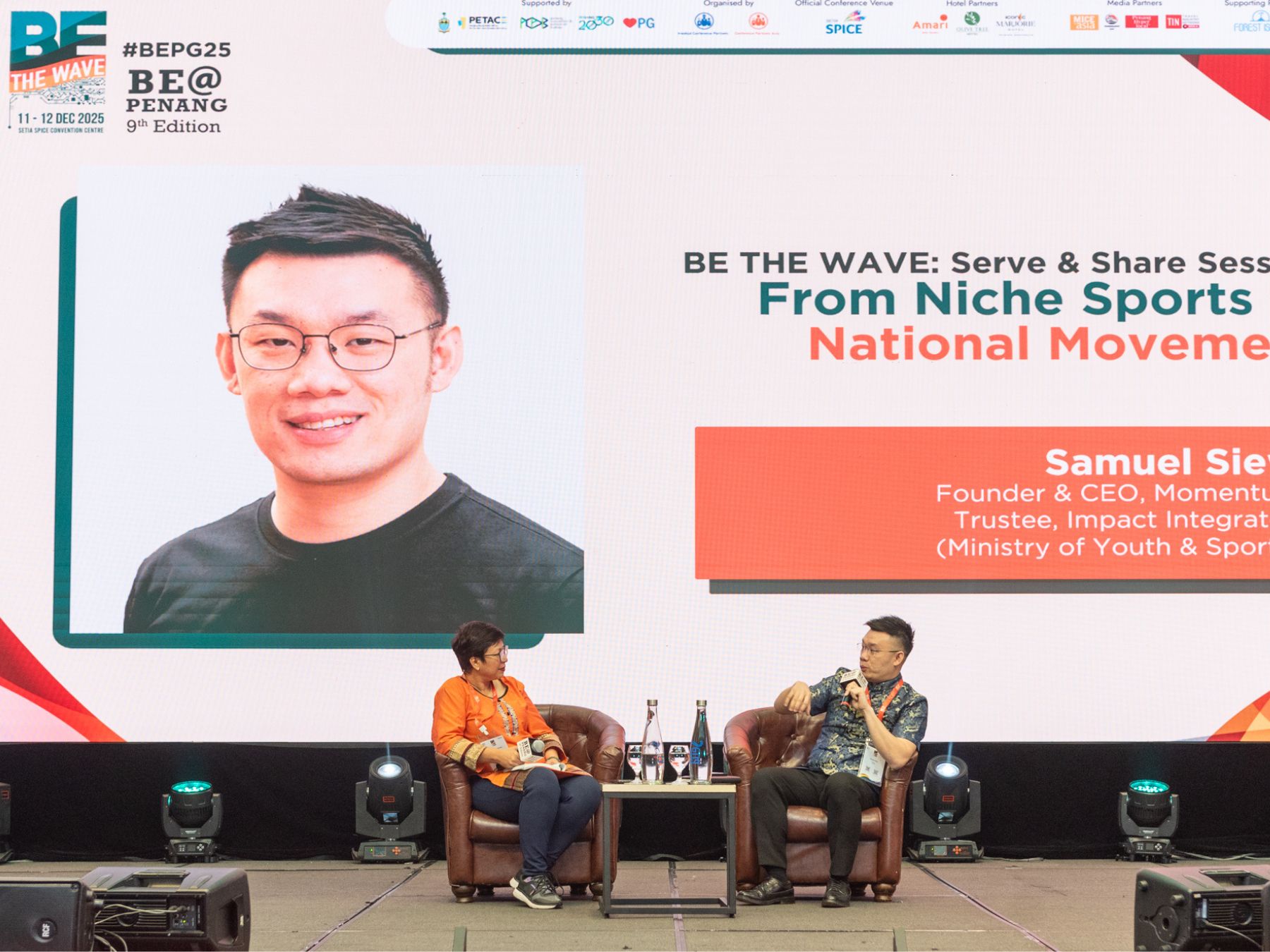
Sports movements do not grow because everyone sees them once. They grow because people play, return and bring someone with them.
Community is the engine, not the audience
This was the central lesson from Malaysia’s pickleball rise shared at BE @ Penang 2025. People gathered around play first. Events, venues, businesses and brand interest followed the behaviour that communities had already created.
That order matters. A campaign can introduce a sport, but a community gives it continuity. Participants need a place in the story: a regular game, a familiar organiser and the confidence to invite someone new.
Technology should reduce the distance to play
Technology does not replace human connection. It helps people discover a game, join without an existing group and return before motivation fades. The useful journey is direct: stranger, joined game, familiar faces, community.
Platforms should therefore measure more than registrations. The stronger signal is whether someone who joined once becomes part of a repeat group.
Accessibility creates momentum
Pickleball combines four participation advantages: a low barrier to start, a rewarding first experience, a natural reason to bring a friend and a social format where different ages and backgrounds can meet as equals.
These are not accidents. They are design principles. Any sport or community programme can ask the same questions: Can someone start without expertise? Will the first session feel rewarding? Is returning visible and convenient? Can a participant bring another person next time?
Build for the second visit
Launch attendance is an incomplete measure of community. Track who returns, who brings someone new, which organisers emerge and whether participation continues without constant promotion.
The first visit creates awareness. The second begins a habit. Enough habits, organised around play, become a movement.